What alcohol actually does to fat loss (it's not what you think)
A glass of wine isn't the end of the world. But it does something specific to your metabolism — and the knock-on effects matter more than the calories themselves.
- Published on
- {min} min read
- 6 min read
- Author
- Leam team
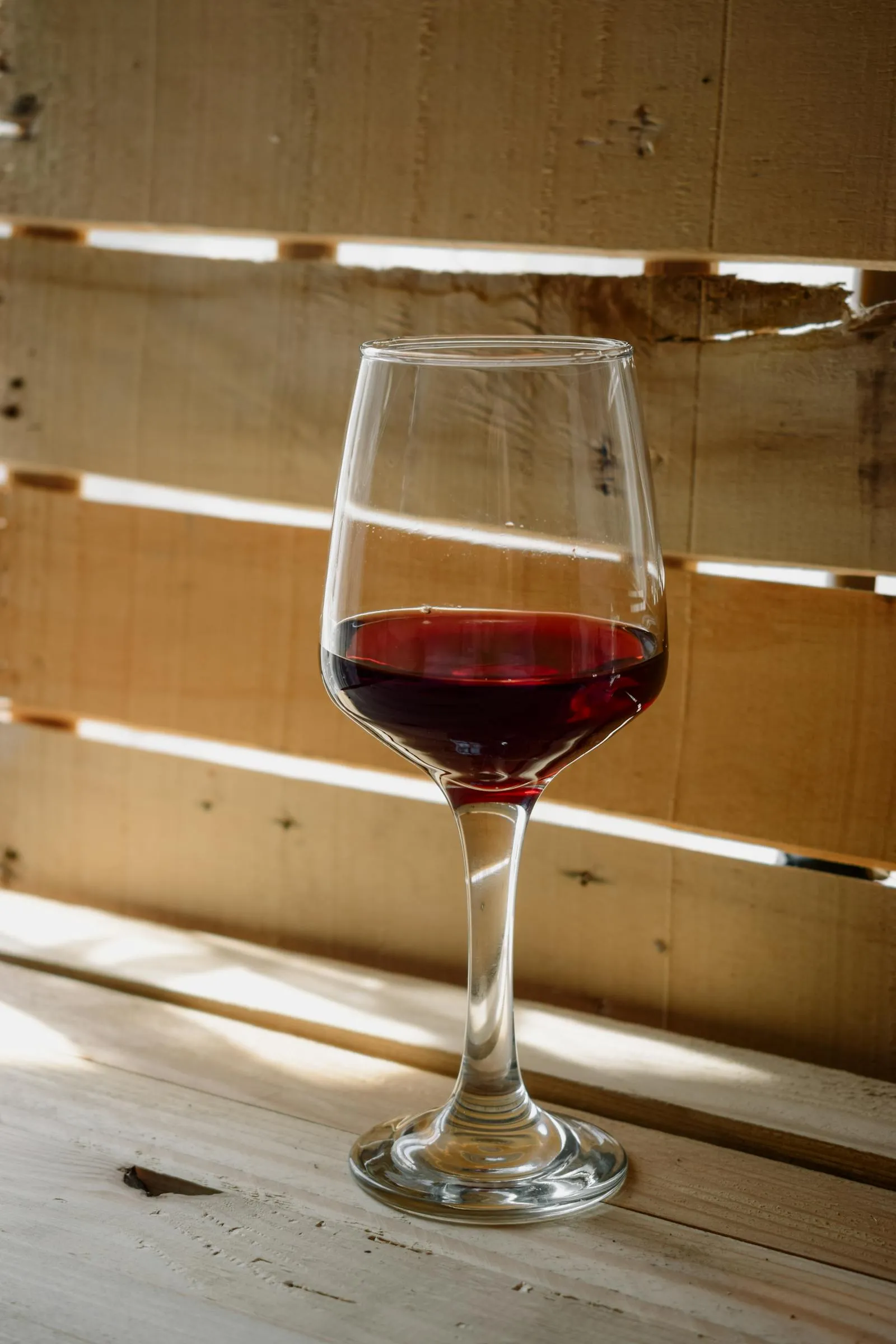
There’s a popular idea that alcohol “turns into fat.” It doesn’t, at least not directly. But alcohol’s effect on body composition is more interesting — and worse — than that cartoon version. Understanding what actually happens in your body after two glasses of wine changes how you think about alcohol in a cut.
The short version: alcohol doesn’t become body fat, but it temporarily stops fat burning. And the indirect effects on eating and sleep are usually bigger than the direct metabolic ones.
What your body actually does with alcohol
Alcohol (ethanol) is toxic. Your liver treats it as a priority threat — processing ethanol before dealing with any other fuel. Specifically:
- Ethanol reaches your liver via the bloodstream within minutes of drinking
- The enzyme alcohol dehydrogenase converts it to acetaldehyde (also toxic)
- Acetaldehyde is converted to acetate, which spreads through the body as fuel
- Muscles and other tissues preferentially burn that acetate
- Meanwhile, fat oxidation is suppressed — your body has no metabolic reason to tap into fat stores when acetate is available and the liver is busy
The landmark paper by Suter, Schutz, and Jequier (1992) in the New England Journal of Medicine showed that adding alcohol to a normal diet sharply reduced whole-body fat oxidation for hours after drinking. The finding has been replicated many times since, including by Siler et al. 1999 in AJCN. That’s not “alcohol turns into fat” — it’s “while your body processes alcohol, whatever dietary fat you ate around it has nowhere to go but storage.”
The indirect effects are bigger
Here’s where the real damage happens for most people:
Calorie blindness
Alcohol itself has 7 kcal/gram — between protein (4) and fat (9). A glass of wine is ~120-150 kcal. Three glasses is ~400 kcal. Most people don’t count these.
But it’s worse: alcohol amplifies hunger and lowers inhibition around food. Yeomans’ 2010 review in Physiology & Behavior summarized dozens of controlled meal-test studies: a pre-meal or with-meal alcohol dose reliably increases food intake at that meal by roughly 10-30%, driven both by appetitive mechanisms and by disinhibition.
So your 400-kcal wine session actually costs 600-700 kcal on the scale. Across a 2-month cut, weekly “moderate” drinking kills most of the deficit.
Sleep wreckage
Alcohol looks like it helps sleep (falling asleep faster) but devastates quality. Ebrahim, Shapiro, Williams, and Fenwick’s 2013 review in Alcoholism: Clinical and Experimental Research catalogued the dose-response effects:
- REM sleep reduced, with more disruption at higher doses
- Deep sleep fragmented in the second half of the night
- Growth-hormone release during early sleep suppressed
- Next-day cortisol and sympathetic tone elevated
Poor sleep → worse hunger regulation the following day → more eating. It’s a cascade that turns “one night of drinking” into “three off-plan days.”
Muscle protein synthesis
For anyone trying to retain or build muscle during a cut: alcohol around training windows blunts protein synthesis. Parr et al. 2014 in PLOS ONE found that 1.5 g/kg of alcohol (about 6-8 drinks for an 80 kg person) reduced myofibrillar protein synthesis by ~24% post-exercise even when protein intake was adequate.
Below that dose effects are smaller, but exist. One night of heavy drinking after leg day isn’t a disaster; a weekly pattern of drinking post-training will compound over a training cycle.
What “moderate” actually looks like
The minimum-damage practice, if you want to drink and still cut:
1-2 drinks max, and:
- Not on training days. Save alcohol for your rest days so muscle synthesis windows aren’t compromised.
- With food, not instead of food. But count those drinks in your daily calories.
- Early, not late. Drinking 4 hours before bed preserves much more sleep quality than drinking right before bed.
- Clear spirits with calorie-free mixers are the lowest-calorie option if you want to maximize drinks per budget.
The “two-drink break-even” rule: if you’re going to have 2 drinks, subtract ~250 calories from that day’s food allowance. Your rate of loss stays roughly on track.
What actually disappears in a cut
Some people (probably including you) will cut alcohol entirely during a focused weight-loss phase and be surprised how much easier things get. Reasons:
- Simpler tracking (no awkward “half a cocktail” entries)
- Better sleep compounds over weeks
- Fewer adherence breakdowns (drinking → pizza cascade)
- Faster visible fat loss from reduced water retention
Most people who try a 6-week alcohol-free cut cite sleep and visible fat loss as the biggest surprises. The calorie savings are nice but not the headline effect.
The honest answer
If you drink casually and want to lose weight slowly: moderate, log it, don’t stress.
If you’re trying to cut aggressively or hit a physique goal: cut alcohol entirely for the cut phase. The math is cleaner, the sleep is better, and you’ll hit your goal faster. Add it back at maintenance.
Leam counts alcohol as normal calories — log a glass of wine the same way you log anything else. But we’ll also surface it in your weekly summary if you drink more than ~3 days/week, because that’s usually the pattern that stalls cuts.
Open Leam and log your actual drinking patterns for a couple weeks — the data is often more sobering than the drinks themselves.
References
- Suter PM, Schutz Y, Jequier E. The effect of ethanol on fat storage in healthy subjects. New England Journal of Medicine 326(15):983-987 (1992).
- Siler SQ, Neese RA, Hellerstein MK. De novo lipogenesis, lipid kinetics, and whole-body lipid balances in humans after acute alcohol consumption. American Journal of Clinical Nutrition 70(5):928-936 (1999).
- Yeomans MR. Alcohol, appetite and energy balance: is alcohol intake a risk factor for obesity? Physiology & Behavior 100(1):82-89 (2010).
- Ebrahim IO, Shapiro CM, Williams AJ, Fenwick PB. Alcohol and sleep I: effects on normal sleep. Alcoholism: Clinical and Experimental Research 37(4):539-549 (2013).
- Parr EB, Camera DM, Areta JL, et al. Alcohol ingestion impairs maximal post-exercise rates of myofibrillar protein synthesis following a single bout of concurrent training. PLOS ONE 9(2):e88384 (2014).